No-cost RCx studies, NYSEG and RG&EVeteran ownedNew York State
Your utility bill says what you spent. It cannot tell you where it went.
Wellman Energy Solutions meters your building circuit by circuit, finds what is wasting money, fixes it, and proves the savings with measured data. Then we file the utility and NYSERDA paperwork that pays for much of it.
Illustrative 24 hour load profile. Not a specific client building.
Rates are going up
The bill is going up. The building does not have to.
NYSEG and RG&E have asked the Public Service Commission for rate increases of 22 to 34 percent. Temporary rates took effect June 1, 2026 and the final decision is still ahead. Every wasted kilowatt-hour, and every kW of avoidable demand, is about to cost more.
Requested figures are the utilities' total bill increase requests. Temporary figures are the revenue increases the Commission authorized effective June 1, 2026 while it decides the full case. National Grid upstate is already on an approved three-year plan of roughly 28 percent. Status as of September 30, 2026; check the Department of Public Service for the current docket.
Use less
Retro-commissioning, schedule and setpoint repair, ventilation that follows occupancy, and a building automation system that does what it was sold to do. Most of it costs little, and the utility program's own criterion is measures that pay back in 18 months or less.
Pay less for what you use
The demand charge, power factor penalties, and harmonic losses are billing problems, not consumption problems. Metering finds them; controls, correction equipment, and demand response fix them, and demand response pays the building.
Get someone else to pay
Utility-funded RCx studies, custom and prescriptive rebates, NYSERDA cost-shared studies, and bonuses that stack through November 30, 2026. WES files the paperwork as a participating Trade Ally and RCx TSP.
Two questions
Does your BMS actually work? Is your building efficient?
Most owners cannot answer either one with data. Check what sounds familiar. It runs in your browser, and nothing is sent unless you submit the screening request below, which includes what you checked.
Does your BMS actually work?
Building management system, building automation, EMS, the front end on the facilities office PC.
Is your building efficient?
Not a feeling. A number you could defend at a board meeting.
Check the boxes that sound like your building. One is normal. Two or more is a building that will pay for its own fix.
Request a building screeningWho pays for it
The question every building owner asks first.
Most WES projects start with a study someone else pays for. These programs are funded through charges already on your utility bill. We tell you the actual number for your building before you commit to anything.
Study and verification, utility funded
Commercial buildings in NYSEG or RG&E territory with an existing building management system and at least 1,800 operating hours a year qualify for no-cost investigation, measurement, and verification support: the utility reimburses the eligible study and verification costs. The owner commits to implementing at least $5,000 of the recommended low-cost measures per building within six months of receiving the study, and the measures typically pay back in 18 months or less. Pair the tune-up with rebated capital upgrades and the program adds a 25 percent bonus on those measures, up to $25,000.
Direct install for qualifying accounts
Accounts at or under 250 kW per month can have up to 60 percent of eligible equipment cost covered, and up to 75 percent with the bundling and disadvantaged community bonuses running through Nov. 30, 2026, subject to program rules and pre-approval. Eligibility turns on your demand, and most owners do not know theirs. We check it for you.
Custom and prescriptive incentives
$0.20 per kWh ($0.30 for long-life measures) and $1.50 per therm saved annually on custom measures, plus prescriptive rebates for ventilation controls, lighting controls, and more. Through Nov. 30, 2026, projects with two or more measures earn a 10 to 30 percent bonus, and projects in a disadvantaged community earn another 25 percent; the two stack. The one rule people get wrong: approval has to come before anything is installed.
The building can earn money
Enrolled buildings are paid for load they can reduce during grid events. Payments depend on the program, the enrolled capacity, and actual performance, so we size it against your metered data before you enroll.
Cost-shared technical studies
P-12 districts can have 50 to 90 percent of a detailed energy study covered, with the highest share for Priority Districts and disadvantaged communities; commercial and industrial owners 50 to 75 percent. Delivered with our licensed professional engineering partner, who holds the prime role on studies that require a PE.
No cost to the farm
The Agriculture Energy Audit Program gives dairies, orchards, greenhouses, vineyards, grain, and poultry operations a comprehensive or targeted energy audit at no cost, delivered by a NYSERDA-assigned FlexTech consultant. Farms must be customers of a New York investor-owned utility. WES helps you apply, meters what the audit cannot see, and implements and files what it recommends.
Incentives are paid by NYSEG, RG&E, or NYSERDA and are subject to program rules, eligibility, and pre-approval. NYSERDA assigns the consultant for Agriculture Energy Audit Program audits; WES is not a NYSERDA contractor. Wellman Energy Solutions is an independent contractor participating in these programs and is not an agent of any utility or of NYSERDA. Program terms change; the figures above reflect the 2026 program year as of September 30, 2026, and the NYSEG and RG&E bundling and disadvantaged community bonuses are scheduled to end November 30, 2026.
Problems we fix
Every one of these has a fix, a partner behind it, and 25 years of doing it.
WES was founded after 25 years in commercial building automation and energy management. The bench of partners exists so one call gets the whole problem handled, not one piece of it.
Nobody knows where the energy goes
One number at the service entrance and a bill that arrives after the fact. We put circuit-level metering on panels, rooftop units, kitchen, and lighting, and the building reports on itself every fifteen minutes.
The BMS runs the building badly, or not at all
Overrides, dead schedules, sequences that fight each other, a vendor who left. We review sequences, repair schedules and setpoints, restore trending and alarms, and stay on as the support call. Platform neutral.
Drives tripping, transformers running hot, a power factor line item
Harmonics and poor power factor shorten equipment life and inflate the bill. We measure continuously, specify line reactors and filters, and verify the correction with the same meters.
The demand charge sets the whole bill
One fifteen minute interval a month decides the demand charge. We find what sets the peak, stage equipment so it does not restart all at once, and where it pencils, add storage or enroll the building in demand response so it gets paid to shed load.
Ventilating empty gyms, cafeterias, and auditoriums
Assembly spaces are empty most of the day and packed for an hour. Demand controlled ventilation with CO2 sensing conditions the people who are actually in the room, and the utility pays a prescriptive rebate for it.
Rebate money left on the table
Pre-approval missed, paperwork nobody had time for, a program nobody knew applied. We match the measure to the program, file it, and track it to the check. The client reviews and signs.
The study needs a PE stamp or a prime contractor
Stamped studies, FlexTech submissions, and prime-contract public work go through established firms WES teams with. You get one point of contact; the credentials are on the bench.
Nobody can prove the last project saved anything
Savings that were modelled, never measured, and the board stopped believing the numbers. We record a baseline first, meter afterward, and report the verified result against it.
How it works
Measured, not modelled.
An energy study normally ends with a projection. WES puts meters on the building first, then reports what actually changed afterward.
Meter
Circuit-level metering on panels, rooftop units, kitchen, and lighting. Not one number at the service entrance.
Find
The data shows which equipment wastes energy and exactly when. Overnight base load, short cycling, bad schedules, power quality.
Fix
Controls, scheduling, power quality remediation, or equipment work by licensed trades. Whatever the data points at.
Get paid
Utility incentives cover much of the cost, and demand response pays the building to reduce load during grid events.
Prove it
We meter it again and report the verified result against the baseline we recorded.
What we do
One company from the first meter to the last rebate check.
Seven service lines, delivered by one accountable firm and a bench of licensed partners. They fall into three jobs.
Circuit-level metering, power quality monitoring, and bill verification. The building reports on itself.
Retro-commissioning, building automation and EMS, power quality correction, and verified results.
Utility and NYSERDA programs filed by WES, and demand response that pays the building back.
Retro-commissioning
A tune-up of the equipment your building already owns: schedules, setpoints, sequences, dampers, and sensors. WES is an approved NYSEG and RG&E Retro-Commissioning Trade Service Provider. For qualifying buildings the utility funds the study and the verification. We find the low-cost operational fixes, you implement them, we prove the savings.
Real-time monitoring and sub-metering
Circuit-level metering with continuous data, alarms, submeter billing, and utility bill verification. Brand-neutral hardware and a WES monitoring platform built for public buildings.
Power quality monitoring and remediation
Harmonics, power factor, and voltage imbalance shorten equipment life and inflate demand charges. We measure continuously, correct with line reactors and filters installed by licensed trades, and verify with data.
Building automation and EMS
Energy management system platform selection, deployment, integration, and support. Sequence review, schedule and setpoint optimization, and integration with monitoring.
Measurement and verification
IPMVP-aligned M&V on every project. Savings are measured against a recorded baseline, so incentive applications and board reports hold up.
Demand response and battery storage
Enrollment in programs that pay facilities to reduce load during grid events, and battery storage integration where demand charges and resilience make the case.
Incentives and filings
NYSEG and RG&E prescriptive and custom incentives, NYSERDA programs, and eligibility screening for federal elective pay, which tax-exempt owners claim through their own tax professional. As a participating Trade Ally, WES prepares and files the utility and NYSERDA applications. You review and sign.
Who we serve
Every building has a funding path. Here is where yours starts.
K-12 school districts and BOCES
Aging rooftop units, a utility budget under pressure, and no capital line to fix it. We start with the data and the funded study, not the invoice.
Municipalities, counties, and state facilities
Town halls, highway garages, water and wastewater plants, public safety buildings, libraries, and state agency sites. Metering that survives a change in administration, and an SDVOB and HUBZone vendor for the procurement side.
Small business
Restaurants, shops, offices, and any account at or under 250 kW of demand, where the NYSEG and RG&E Small Business Program covers most of the project cost.
Commercial and industrial
Manufacturers and large commercial buildings where demand charges, power quality, and process load are where the money actually is.
Farms, wineries, breweries, and grow facilities
Dairies, greenhouses and indoor grow, wineries, breweries, cold storage, and food processing. Refrigeration, chillers, vacuum pumps, and grow lighting set the demand charge; the utility program often pays a large share of the fix, and NYSERDA provides the farm energy audit at no cost.
Hotels, resorts, and hospitality
Guest rooms that condition empty space, kitchens and laundry that set the peak, pools and spas that never turn off. Occupancy-based control and metering pay back fastest where the building runs 24 hours a day.
Healthcare, senior living, and higher education
Campuses that cannot shut down at night. Air handlers, kitchens, sterilization, and lab load run around the clock, so the fixes come from sequences, setpoints, and demand management, not from turning things off.
Multifamily and property management
Tenant sub-metering and allocated billing, common-area and central plant load, and the data to settle who pays for what. Residential submeter billing in New York requires Public Service Commission approval and approved meter models; WES designs to that standard.
What the data finds
Six things a utility bill will never show you.
These are the patterns circuit-level metering turns up in ordinary buildings. None of them appear on a monthly bill, and none of them get found by walking the building. Every one of them is fixable.
Equipment running hard in an empty building at 2 a.m. Exhaust fans never put on a schedule, unit heaters, walk-in compressors, a rooftop unit stuck in occupied mode. It bills every hour of every night, weekends and all summer.
A compressor starting and stopping every few minutes instead of running a proper cycle. Metering shows it as a rapid sawtooth nobody can hear from the hallway. It wears equipment out early and inflates demand.
Units running to an occupancy schedule somebody set years ago, for a building that has since changed its hours, its rooms, or its calendar. Summer break, snow days, and half days are where this shows up.
Everything restarting at once after a night setback. On a demand-billed account, one fifteen minute interval can set the demand charge for the entire month.
Current that does no useful work, plus distortion from drives and electronic ballasts. It shows up as heat in transformers and motors, as nuisance tripping, and on many rate classes as a line item you are already paying.
Panels assumed full because of a nameplate calculation, when measured peak says otherwise. That gap is the difference between adding a wing or EV chargers on the existing service and paying for an upgrade you do not need.
Recent work
- New York school district: continuous energy monitoring live in two buildings, with the district's facilities staff reading the same data WES does.
- Same district: harmonic distortion measured on the rooftop units serving large assembly spaces. Line reactors installed by a licensed electrical contractor. Correction confirmed by the monitoring data afterward.
- Same district: enrolled in demand response, so the buildings are paid for load they can shed on peak days.
- Municipal building controls assessment in New England as a subcontractor to a prime contractor.
What we publish, and when
Client names, photographs, and before and after figures appear here only with the client's written approval. Until then, the work is described and the names are withheld.
Named projects with measured before and after results will be published as clients approve them. References are available on request ›
Who we work with
The equipment we stand behind, and the bench that puts it in.
Not a logo wall. Each of these is a working relationship: equipment we put in buildings, or a service we coordinate for the building, and we will tell you which one fits and why.
On public sector work subject to Build America, Buy America, WES specifies controls and metering hardware manufactured in the United States where the product line supports it. Tell us the funding source and we will confirm in writing which products meet the applicable thresholds.
Prime contractor and teaming relationships
WES works as a subcontractor and teaming partner to regional and national firms, bringing SDVOB and HUBZone participation along with the metering, controls, and power quality scope.
Delivery partners, by role
Behind the equipment sits a bench of established firms WES brings in by role. You deal with one company and one point of contact. We carry the coordination.
Licensed electrical contractors handle the live work, the panel work, and the permits. WES selects the monitoring equipment and commissions the result; licensed trades install.
A licensed professional engineering firm takes the prime role on anything requiring a PE, including NYSERDA FlexTech studies, and teams with WES on retro-commissioning.
Utility program implementers and the Trade Ally channel handle application routing, pre-approval, and the paperwork that decides whether the money lands.
Curtailment service providers hold the NYISO market relationship, enroll the site, and settle the payments the building earns.
About WES
A building performance firm built in the Southern Tier.
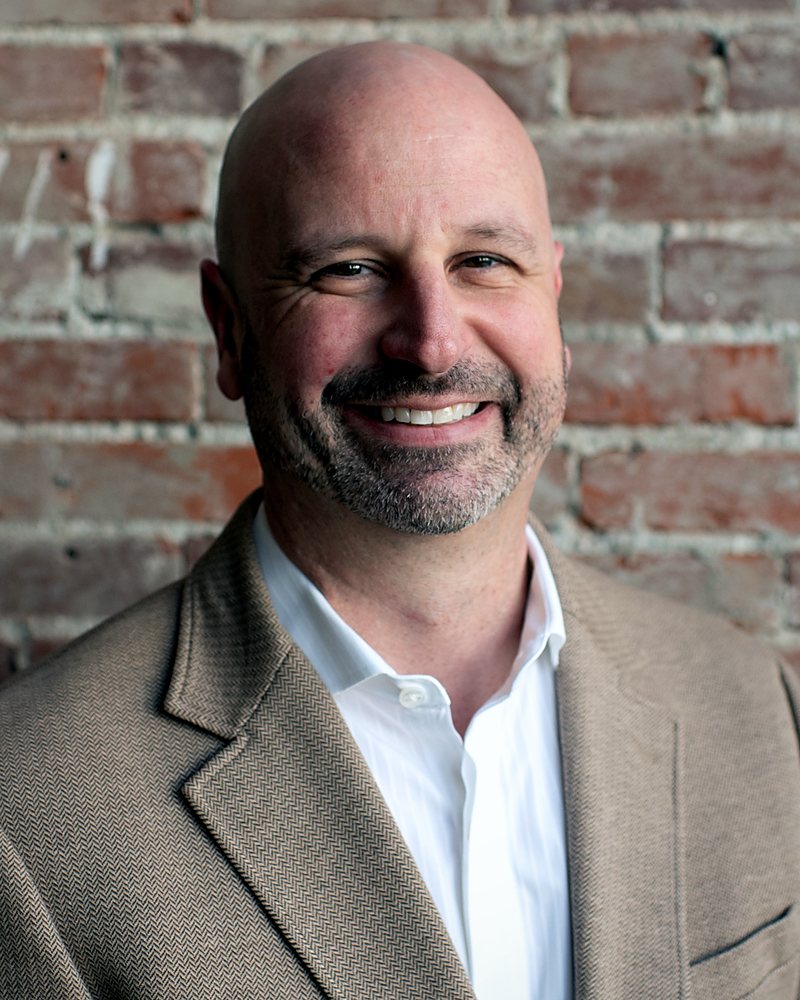
We do not guess. We meter the building, fix what the data points at, and meter it again.
Wellman Energy Solutions was founded by Brad Wellman after 25 years in commercial building automation and energy management, most of it inside the mechanical rooms of schools, campuses, and public buildings across New York. Before that he served in the U.S. Navy maintaining F/A-18 avionics through two Persian Gulf deployments.
WES is a New York State certified Service-Disabled Veteran-Owned Business, an SBA-certified Service-Disabled Veteran-Owned Small Business (VetCert) and VOSB, and SBA HUBZone certified. Public owners can use WES to meet SDVOB participation goals directly or as a teaming partner to a prime contractor.
Based in Corning, New York, and serving all of New York State outside the five boroughs, with a small team and a partner bench that reaches across the state. When you call, you get Brad.
- NYS SDVOB #262564
- SBA VetCert SDVOSB and VOSB
- SBA HUBZone certified
- SAM.gov CAGE 12S72
- NYS Vendor File registered
- NYSEG and RG&E participating Trade Ally
- NYSEG and RG&E Retro-Commissioning TSP
- Capability statement available on request
Questions we get every week
Straight answers on programs, money, and what WES does and does not do.
Does NYSEG or RG&E really pay for a retro-commissioning study?
Yes. Under the 2026-27 NYSEG and RG&E Retro-Commissioning program, the study and the measurement and verification are 100 percent utility funded for qualifying commercial, institutional, and municipal buildings. The owner commits to implementing at least $5,000 of the low-cost measures the study identifies per building and can use their own staff or any contractor to do it. WES is an approved Trade Service Provider for the program.
What is the difference between an energy audit and retro-commissioning?
An energy audit produces a report of recommended equipment upgrades with estimated paybacks. Retro-commissioning is hands-on tuning of the equipment a building already owns: schedules, setpoints, sequences, dampers, sensors, and controls. It costs little to implement, typically pays back in 18 months or less, and in NYSEG and RG&E territory the study is utility funded.
What does WES cost?
The building screening is free. In NYSEG and RG&E territory the retro-commissioning study and verification are utility funded, and NYSERDA cost-shares energy studies for schools, commercial buildings, and farms. Monitoring and any implementation work are priced per building after the screening, with the incentives already netted out, so you see the real number before you commit to anything.
Can I get a free energy audit for my farm, winery, or greenhouse?
Yes. NYSERDA's Agriculture Energy Audit Program provides a comprehensive or targeted energy audit, or greenhouse benchmarking, at no cost to farms that are customers of a New York investor-owned utility. NYSERDA assigns the consultant. WES helps you apply, meters what the audit cannot see, and implements and files the rebates on what it recommends.
Does WES do engineering?
No. Wellman Energy Solutions is not an engineering firm and does not offer professional engineering services. Work that requires a licensed Professional Engineer, including stamped studies and NYSERDA FlexTech submissions, is performed by the licensed engineering firms WES teams with. WES handles metering, building automation, power quality, retro-commissioning fieldwork, measurement and verification, and incentive filing.
Where does WES work?
All of New York State outside the five New York City boroughs, from a base in Corning. Most work is in NYSEG and RG&E territory across the Southern Tier, Finger Lakes, Central New York, and Western New York, and WES also takes subcontract work in New England through teaming partners.
How do I get started?
Request a building screening. It is a conversation and a look at your last twelve months of utility data, at no charge and with no obligation. WES tells you which funded program fits the building and what the first step costs, which for most buildings is nothing.

Start here
Find out what your building is doing at 2 a.m.
A building screening is a conversation and a look at your last twelve months of utility data. No charge and no obligation.
- Within one business day Brad calls or emails to set a 20-minute conversation.
- Within a week WES reviews twelve months of bills and interval data, if you have it.
- Then, in writing which funded programs your building qualifies for, what WES would meter first, and what the first step costs, which for most buildings is nothing.
Email brad@wellmanenergysolutions.com
Office 5 E. Market St., Suite 271, Corning, NY 14830